Hardscaping Materials Guide: Stone, Gravel, and Sand for NJ Projects
By Louie Paracuelles, Kirk Allen Landscape Supply
Hardscaping makes outdoor spaces work better and look great in New Jersey. This guide walks through the main materials—stone, gravel, and sand—their common types, uses, and benefits. You’ll learn how to pick materials that last, how to install them right, and simple maintenance tips to keep projects looking good.
- Stone types like bluestone, flagstone, and granite offer durability and aesthetic options for NJ hardscaping.
- Choosing frost-resistant stones and proper drainage ensures longevity in New Jersey’s freeze-thaw climate.
- Gravel varieties such as pea gravel, crushed stone, and river rock serve different landscaping and driveway needs.
- Calculating gravel quantity requires area measurement and depth to purchase the correct amount for projects.
- Paver base sand provides a stable, well-drained foundation essential for durable paver installations.
- Avoid common installation mistakes by ensuring proper drainage, base preparation, and climate-appropriate materials.
- New Jersey’s soil types affect drainage and stability, influencing material choice and installation methods.
- Select suppliers offering quality materials, variety, and reliable delivery to support successful hardscaping projects.
Comprehensive Guide on Hardscaping Materials for New Jersey Projects
Picking the right hardscaping materials matters for every project. The right choices boost curb appeal and help features last. In New Jersey, climate, soil, and how the space will be used affect what works best. Knowing each material’s strengths helps homeowners and contractors meet their goals.
Stone
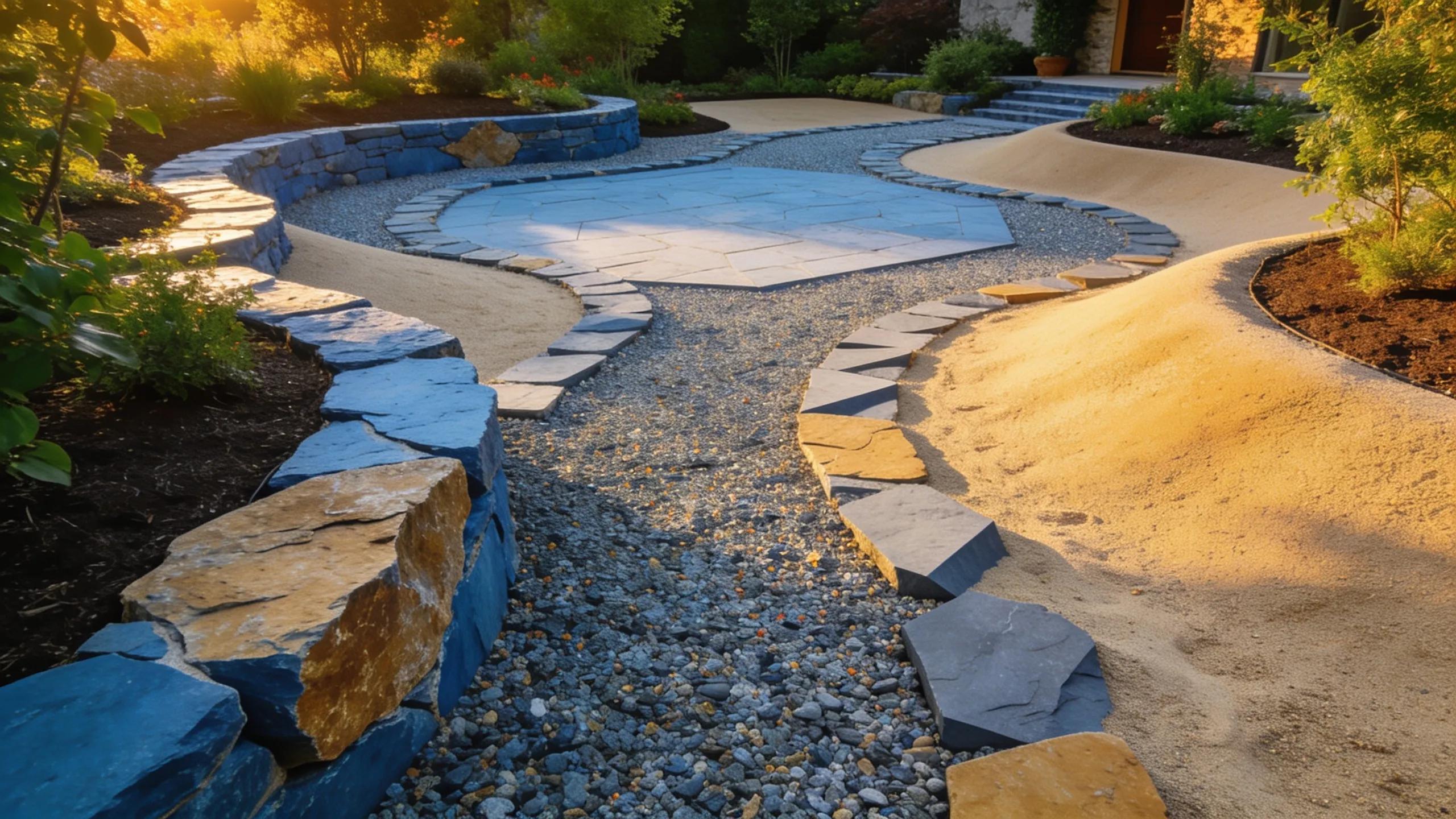
Stone is a common pick for patios, walkways, and retaining walls because it’s durable and versatile. Various types of stone suit different jobs, so match the stone to the use and traffic level.
What Types of Stone Are Best for Hardscaping in NJ?
In New Jersey, these stones are common choices:
- Bluestone: Known for its rich blue-gray color, bluestone is ideal for patios and walkways due to its slip-resistant surface.
- Flagstone: This flat stone is perfect for creating natural-looking pathways and patios, offering a rustic charm.
- Granite: Extremely durable, granite is often used for steps and curbing, providing a long-lasting solution for high-traffic areas.
Which stone sizes and colors suit patios and walkways?
Stone size and color shape the look. Large pieces give a formal feel; smaller pieces read as casual and natural. Pick colors that fit your home and plantings to make the space feel unified.
How does NJ climate affect stone durability?
New Jersey winters and humid summers can stress stone. Choose frost-resistant options like granite and bluestone to reduce cracking. Good drainage and correct installation add years to any stone hardscape.
Gravel
Gravel is flexible, drains well, and is quick to install. It’s used for driveways, garden paths, and as a base under other hardscape features.
Which Gravel Varieties Work Well for Landscaping in NJ?
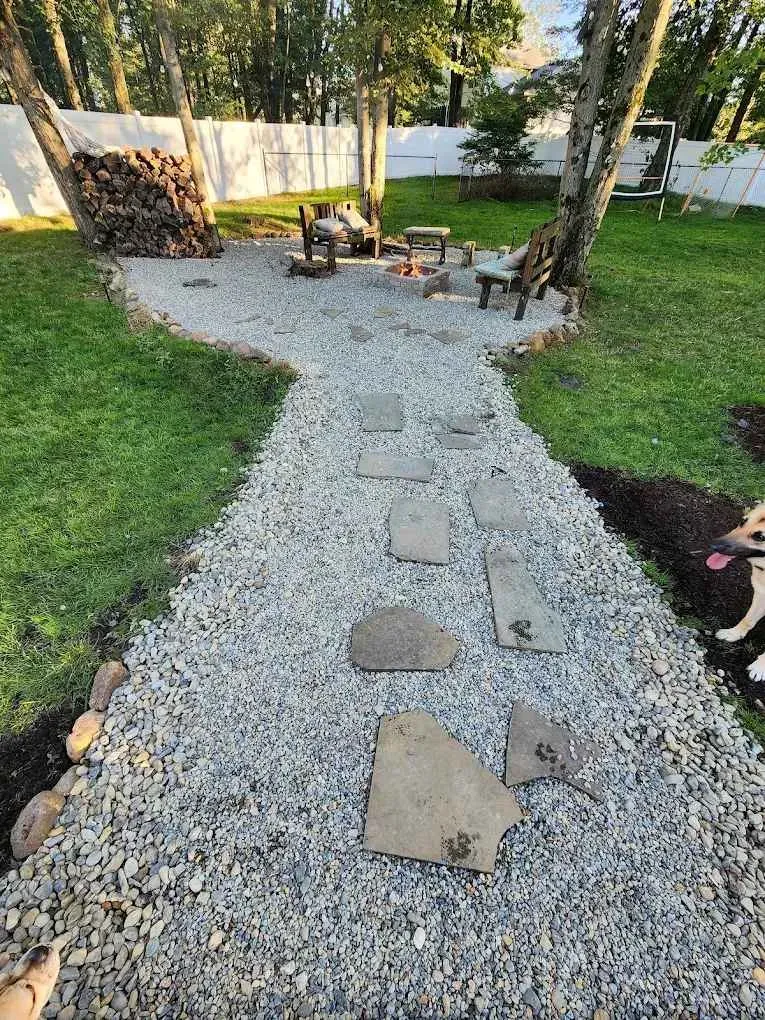
These gravel types work well in New Jersey:
- Pea Gravel: Small, rounded stones that are comfortable to walk on, making them ideal for pathways and play areas.
- Crushed Stone: Available in various sizes, crushed stone is often used for driveways and as a base for patios due to its stability.
- River Rock: Larger, smooth stones that add a decorative touch to gardens and water features.
What are the common gravel types for driveways and paths?
Crushed stone compacts well and makes a firm driveway surface. Pea gravel looks good but can shift and need more upkeep. For paths, combining pea gravel with larger stones gives a usable and attractive finish.
How to calculate gravel quantity for your NJ project?
Measure the area in square feet and choose a depth (2–3 inches is common). Then use the formula below to find cubic yards needed.
That formula helps you buy the right amount so you don’t run short or order too much.
Sand
Sand is essential in hardscaping, especially as the base under pavers and similar features. Learn about different kinds of sand and when to use each.
What Sand Should You Use for Paver Bases in NJ?
For paver bases, use paver base sand. It gives a stable, drained layer that supports pavers without shifting.
What is paver base sand and why is it important?
Paver base sand is a coarse, angular sand that locks in place and keeps pavers from moving. It drains well so water won’t pool and cause erosion or damage.
How to prepare and install sand for paver bases?
Dig to the right depth, spread the paver base sand, and level it with a screed board. Compact the sand before you lay pavers to create a firm, even foundation.
How to Avoid Common Hardscape Installation Mistakes in NJ?
Good installation is the difference between a long‑lasting hardscape and constant repairs. Avoid these common errors:
- Neglecting Drainage: Failing to account for water drainage can lead to erosion and damage.
- Inadequate Base Preparation: Not properly compacting the base can result in shifting and settling over time.
- Choosing the Wrong Materials: Selecting materials that are not suited for the local climate can lead to premature wear and tear.
How Does NJ’s Climate Influence Hardscape Material Choices?
New Jersey’s freeze‑thaw cycles can harm some materials. Choosing durable, frost‑resistant products and planning for drainage helps keep installations sound through seasonal changes.
What freeze-thaw effects impact stone, gravel, and sand?
Freeze and thaw make materials expand and shrink. That can crack stone or move gravel. Sand can wash away if it isn’t held in place. Using frost‑resistant materials and proper drainage lowers these risks.
How do soil types in NJ affect hardscape installation?
Clay soils hold water and can cause erosion, while sandy soils drain fast but may not support heavy features. Know your soil so you can pick the right materials and installation methods.
Where Can You Find Reliable Hardscape Materials Suppliers and Delivery in NJ?
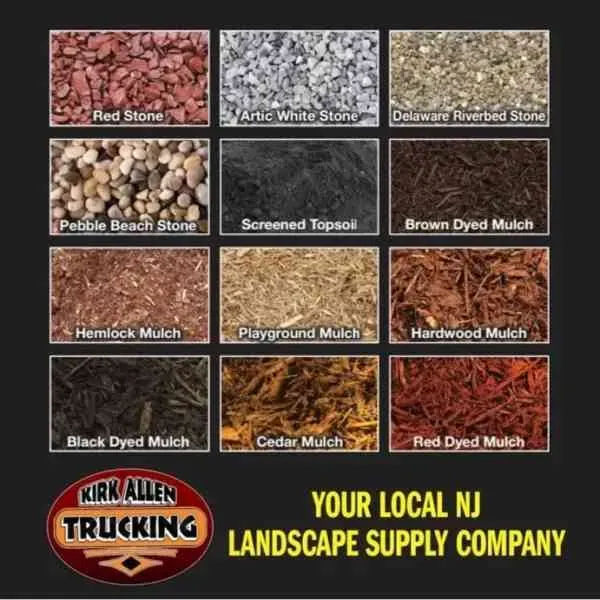
Work with a local supplier you can trust for materials like mulch, topsoil, stone, and sand. Look for reliable delivery and clear communication to keep your job on schedule.
What to look for in a NJ landscape stone and sand supplier?
When selecting a supplier, consider the following:
- Product Variety: A good supplier should offer a wide range of materials, including different types of stone, gravel, and sand.
- Quality Assurance: Ensure the supplier provides high-quality materials that meet industry standards.
- Delivery Options: Look for suppliers that offer reliable delivery services to ensure timely project completion.
How does landscape stone delivery work in Northern New Jersey?
In Northern New Jersey, delivery usually requires scheduling a time with the supplier. Materials arrive on trucks built for bulk loads. Tell the driver any site constraints so the drop goes smoothly.
This table shows each stone’s traits and the best uses to help you choose for your project.
This table compares gravel sizes and typical uses so you can pick the right material for driveways, paths, or decoration.
Use this table to match sand types to the job so you get the right performance for pavers, mortar, or play areas.
Choosing the right stone, gravel, and sand helps create durable, attractive outdoor spaces in New Jersey. When homeowners and contractors understand material options and proper installation, projects run smoother and last longer. Kirk Allen Landscape Supply offers quality materials and dependable delivery to support your hardscaping work.
Frequently Asked Questions
1. What are the eco-friendly options available for hardscaping materials in NJ?
Eco-friendly options include permeable pavers, recycled concrete, and locally quarried natural stone. Permeable pavers let rain soak through, which cuts runoff and helps refill groundwater. Recycled concrete lowers waste and uses fewer new resources. Using local stone cuts transport distance and emissions. These choices help the environment and can create attractive features.
2. How can I maintain my hardscaping features throughout the seasons?
Keep hardscapes clean with a power washer to remove dirt and algae. Use a non‑corrosive de‑icer in winter to protect surfaces from freeze‑thaw damage. In spring, check for settling and top up gravel or sand where needed. Trim plants near hardscape edges to prevent overgrowth.
3. What should I consider when designing a hardscape layout?
Think about flow, scale, and visual interest. Make sure paths connect to doors and garden areas. Mix materials and textures to define spaces. Choose sizes that fit the yard—a huge stone can overwhelm a small space, while fine gravel may look lost on a large drive. Pick colors that match your home and plants for a cohesive look.
4. How can hardscaping improve outdoor functionality?
Hardscaping creates usable areas for relaxing and moving around, which helps protect lawns. Patios and walkways give clear places to sit and walk. Raised beds can work with hardscapes to make planting easier. Driveways and gravel paths make access simple and help direct water where it won’t cause damage.
5. What role does drainage play in successful hardscaping?
Good drainage keeps water from pooling and damaging materials. Plan to move excess water away using swales, trenches, or perforated pipe. Give surfaces a slight slope so water runs off and your hardscape stays stable.
6. Are there any permits required for hardscaping projects in NJ?
Permits may be required, especially for larger projects like patios or retaining walls. Local rules vary, so check with your municipal planning or building department before you start to avoid delays or fines.
7. Can hardscaping increase property value? How?
Yes. Well‑designed hardscaping boosts curb appeal and adds functional outdoor living space, which buyers value. Quality materials and solid construction make features last longer and can increase resale value compared to similar homes without those upgrades.
Conclusion
Picking quality stone, gravel, and sand is key for outdoor projects in New Jersey. These materials improve the look and help features stand up to weather and use. Homeowners and contractors who plan with the right materials see better results. Explore our selection of hardscaping materials and delivery options to get your project moving.