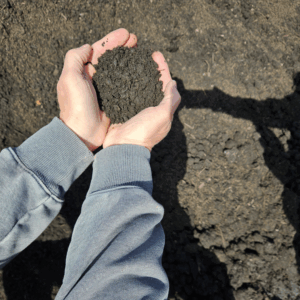
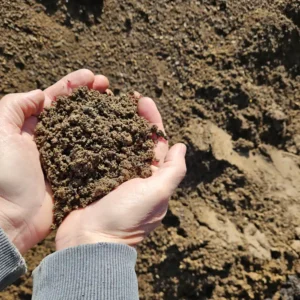
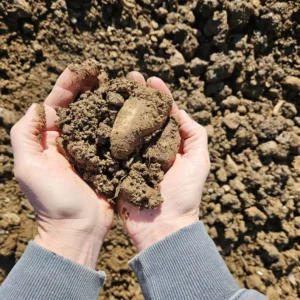
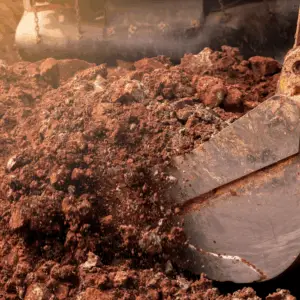
Which Soil Do You Need? Screened topsoil is the right choice for lawns, garden beds, and anywhere you plan to plant. We screen it to remove rocks, roots, and debris, so it spreads evenly and drains well. Choose black topsoil for a rich, dark finish on visible beds, or brown topsoil for seeding and general lawn work. Fill dirt is unscreened material for raising grades, filling holes, and building up low spots. It costs less than topsoil because it is not meant for planting. Use it as a base layer, then cap it with 4 to 6 inches of screened topsoil where anything will grow. Screened fill sits in between. It is cleaned of large rocks and debris but not enriched, which makes it ideal for backfilling trenches, leveling around foundations, and base work under patios where you want cleaner material than common fill. How Much Do You Need? One cubic yard covers about 100 square feet at 3 inches deep. For a new lawn, plan on 4 to 6 inches of topsoil, which works out to roughly 1.5 cubic yards per 100 square feet. Not sure? Use our yardage calculator or call us at (973) 347-3117 with your measurements and we will figure it for you. Delivery Across Northern New Jersey (A $25.00 fuel charge applies to every delivery) We deliver bulk topsoil and fill from our yard at 20 Continental Dr, Stanhope, NJ, Monday through Friday, 7:00 AM to 5:00 PM, and Saturday, 7:00 AM to 12:00 PM. |